
Birthing Problems In Cats
Learn which birthing behavior falls within the range of 'normal', and more importantly, learn the warning signs that a queen needs help to deliver her kittens safely.
Learn which birthing behavior falls within the range of 'normal', and more importantly, learn the warning signs that a queen needs help to deliver her kittens safely.

When labor and delivery does not go normally, it can be an anguishing decision whether to schedule the mother-to-be for a C-section, or whether to wait and see if the queen can deliver naturally. Test your knowledge and instincts by deciding what you would do given specific birthing scenarios.

The response to the first article in this series was overwhelming - and so here are 10 more real-life feline pregnancies for you to test your knowledge and instincts by deciding what you would do given specific birthing scenarios.
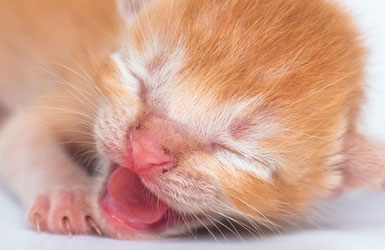
The response to the first article in this series was overwhelming - and so here are 10 more real-life feline pregnancies for you to test your knowledge and instincts by deciding what you would do given specific birthing scenarios.

Knowing how to use a stethoscope is a simple and useful skill every cat breeder can learn, and purchasing a stethoscope is not an expensive proposition. Here is how to pick the best stethoscope to suit the needs of a cat breeder.

A newborn kitten may have amniotic fluids in its mouth and nose at its birth. It is essential that these fluids are cleared from the newborn's airways in order for it to breathe. Learn the techniques to clear the kitten's airways through a series of photos and instructions.

Cleft palate is a birth defect that occurs in all breeds of cats. Sometimes it is a minor problem and sometimes it is severe. Photos of newborn kittens show you exactly what to look for in the newborn kitten.

A Siamese breeder shares her experience with the delivery of a very large kitten that became stuck in the birth canal during delivery..

Panleukopenia, previously called feline distemper, is a highly contagious disease caused by a parvovirus (FPV) that is closely related to canine parvovirus in dogs. This article details everything you need to know about this potentially lethal infection.

The first 12 weeks of a kitten's life are the most critical in its development. Learn what to expect from the first 24 hours following birth -- to after its second vaccination when the kitty is ready to go to its new home.